Introduction
In the realm of vaping, le débat autour de la position du flux d'air par rapport à la taille en tant que principal facteur influençant les performances est une discussion dynamique et continue parmi les passionnés. Cet article vise à explorer ces deux aspects critiques de la conception, examiner comment ils affectent l’expérience globale de vapotage, caractéristiques du produit, commentaires des utilisateurs, analyse concurrentielle, avantages et inconvénients, et cibler les données démographiques des utilisateurs.
Airflow Position and Its Impact
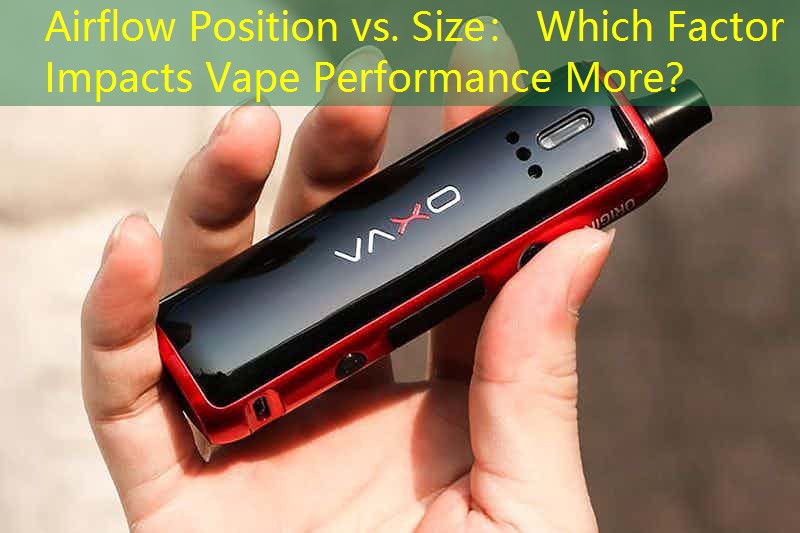
Airflow Position
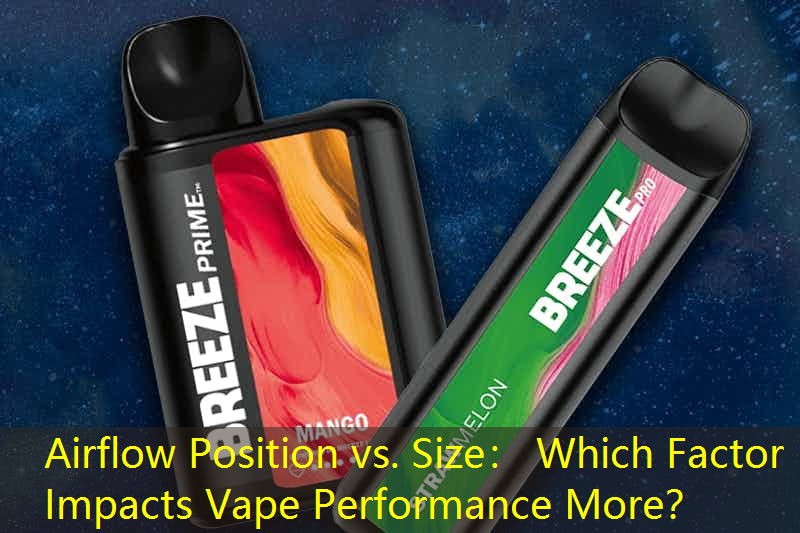
Airflow position refers to the location of the air intake on a vape device. Typiquement, le flux d'air peut être monté sur le dessus, monté sur le côté, ou monté en bas. Chaque poste offre des avantages distincts. Le flux d’air monté sur le dessus entraîne généralement une réduction des fuites, tandis que le flux d'air monté en bas a tendance à améliorer la saveur en offrant un chemin direct vers le serpentin.. Le flux d'air latéral peut offrir un équilibre, providing ample vapor production alongside flavor enhancement.
The positioning affects the way air interacts with the coil and e-liquid, ultimately influencing the temperature and density of the vapor produced. Users who prefer dense clouds may lean towards devices with bottom airflow, while those prioritizing flavor might prefer a top or side-mounted system.
Size Matters: The Role of Chimney and Coil Size
Size of Components
The size of various components in a vape device—including the chimney, bobine, and e-liquid chamber—plays a significant role in performance. A larger chimney can facilitate better airflow, resulting in smoother hits and larger vapor production. Cependant, it can also lead to a less concentrated flavor profile. Inversement, smaller components may enhance flavor but restrict vapor output.
The size of the coil also matters; larger coils can heat up more quickly, increasing vapor production but may not always yield the best flavor. Understanding the balance between size and position can help users optimize their vaping experience.
Expérience utilisateur: A Dual Perspective
Performance and Feedback
User feedback highlights the trade-offs between airflow position and size. Some users report that devices with customizable airflow settings allow them to fine-tune their experience, providing the flexibility to switch between flavor and vapor production depending on their preference. Others find that certain sizes deliver a consistent performance that meets their needs without the added complexity.
Comparaison concurrentielle
Competitor Analysis
When compared to competitors, devices offering advanced airflow systems typically stand out. Brands that integrate adjustable airflow options, such as DTL (Direct-to-Lung) and MTL (Bouche-à-poumon) capabilities, tend to receive favorable reviews. Models from brands like Vaporesso and SMOK demonstrate effective use of airflow position and size, appealing to a broad audience.
Conclusion: Who Should Choose What?
Données démographiques des utilisateurs cibles
The ideal user demographic is essential for understanding which factor leans towards preference. Newer vapers may prefer simpler designs with clear airflow options, while seasoned vapers might appreciate the intricacies of tuning airflow size and position for a personalized experience. Finalement, both airflow position and component size are critical in determining the vape performance, and understanding personal preference makes all the difference in choosing the right device.